And, naturally, a number of politicians have. Here's some quotes from three (the source of all are Wikipedia/Wikiquote, since my point is more about words than the three individuals here).
First, three quotes from one politician:
⦁ "Democracy is impossible in a capitalist system. Capitalism is the realm of injustice and a tyranny of the richest against the poorest."
⦁ "We must confront the privileged elite who have destroyed a large part of the world."
⦁ "Let the dogs of the empire bark, that's their job; ours is to battle to achieve the true liberation of our people."
Who said that? None other than the late President of Venezuela Hugo Chavez.

He's an easy target, of course; the North American Congress on Latin America (said to be "left-wing") looking back on Chavez: "reductions in poverty and inequality during the Chávez years were real, but somewhat superficial [...] structural poverty and inequality, such as the quality of housing, neighborhoods, education, and employment, remained largely unchanged."
Second, three quotes from another:
⦁ "[I]f you don't modernize yourselves, leave. You're poor? Whore mother! Suffer through hardship and hunger. I don't care."
⦁ "What I don't like are kids [being raped]. You can mess with, maybe Miss Universe. Maybe I will even congratulate you for having the [crude word for daring/chutzpa] to rape somebody when you know you are going to die [for your crime]."
⦁ "Just because you're a journalist you are not exempted from assassination if you're a son of a [expletive deleted]."
Whose words were those? Philippine President Rodrigo Duterte, of whose first year as president the Human Rights Watch (HRW) called a human rights calamity.
Third, one more politician, three more quotes:
⦁ "Our religion has defined a position for women: motherhood. Some people can understand this, while others can’t. You cannot explain this to feminists because they don’t accept the concept of motherhood."
⦁ "Those who do not want to take a side will be eliminated from (meaning: irrelevant for) the process."
⦁ "...it's not possible for a Muslim to commit genocide."
Who said those? Turkish President Recep Erdogan.
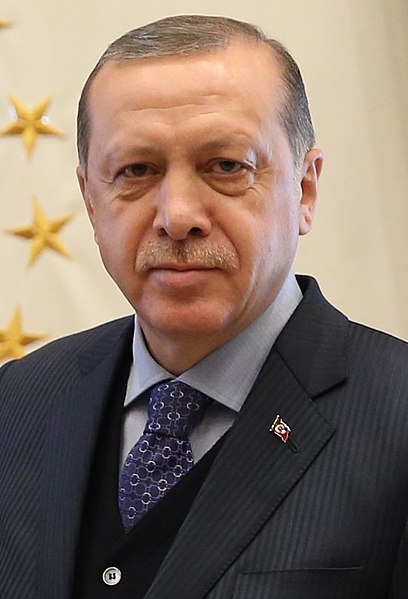 What kind of president is he? Well, once again from Wikipedia, political scientists no longer consider Turkey as a fully fledged democracy, citing the lack of free and fair elections, purges and jailing of opponents, curtailed press freedom, and Erdogan's efforts to broadening his executive powers and minimize his executive accountability.
So, what's my point?
Namely this. I regard the only real criterion for rating presidents as whether their country benefited or not from that leader's administration. People who exploit discontent to attain power don't have a good track record for improving their country. They're best at showing the way for future heads of state to get there: to keep people discontented, and use them. Exploit them.
⦁ "Our religion has defined a position for women: motherhood. Some people can understand this, while others can’t. You cannot explain this to feminists because they don’t accept the concept of motherhood."
⦁ "Those who do not want to take a side will be eliminated from (meaning: irrelevant for) the process."
⦁ "...it's not possible for a Muslim to commit genocide."
Who said those? Turkish President Recep Erdogan.
So, what's my point?
Namely this. I regard the only real criterion for rating presidents as whether their country benefited or not from that leader's administration. People who exploit discontent to attain power don't have a good track record for improving their country. They're best at showing the way for future heads of state to get there: to keep people discontented, and use them. Exploit them.
How can we spot such politicians? Not just because they anger people, because that can happen anyway. Look for loaded words (I talked about them a little in "Writing 102," Part 6: Tone, and more in "Writing 201," Goal 3: Anger.) Words packed with emotional loading are meant to get the audience feeling rather than thinking. (Examples from the quotes: "tyranny," "elite," "dogs," "whore," and crude words and expletives.)
The politics of discontent are a great way to take your country into diminished democracy, disintegrating human rights, and a declining economy. Those who employ these tactics aren't there to help you, just to help themselves. Something to keep in mind when watching ploys, and to avoid being played.
The politics of discontent are a great way to take your country into diminished democracy, disintegrating human rights, and a declining economy. Those who employ these tactics aren't there to help you, just to help themselves. Something to keep in mind when watching ploys, and to avoid being played.

